Indie Press Month is a time to shine a light on the world of independent publishing. This yearly celebration serves as a platform to recognize and support the important contributions of indie presses to the literary world. Among the many significant independent publishers, Menasha Ridge Press and Wilderness Press stand out with their focus on outdoors and adventure titles.
The Significance of Indie Press Month
Indie Press Month is a key initiative that brings attention to smaller, independent publishers that often bring unique and diverse voices to the forefront of literature. This celebration, led by the Independent Publishers Caucus (IPC), encourages readers to explore beyond mainstream publishing houses and discover the rich stories and information that indie presses offer. Support of these publishers creates a more diverse and dynamic literary ecosystem.
Menasha Ridge Press: Pioneering Outdoors Adventure Literature
Founded over 35 years ago, Menasha Ridge Press has established itself as a cornerstone in the indie publishing world, particularly in the niche of authoritative and engaging content for outdoors enthusiasts and travelers alike.
The Menasha Ridge Press catalog spans a wide range of topics, including wilderness sports, wildlife, history, and travel. By focusing on these specialized areas, Menasha Ridge Press illustrates the indie spirit, giving voice to authors and subjects that might otherwise be overlooked by larger publishing houses.
Wilderness Press: A Legacy in Outdoors Guidebooks
Established in 1967 in Berkeley, California, Wilderness Press has been a trailblazer in outdoors guidebooks for more than five decades. The journey began with the publication of Sierra North, a guidebook for the Northern Sierra Nevada that set the standard for outdoors guides to come.
Wilderness Press has built its reputation on producing thoroughly researched guidebooks and maps. Its publications are known for practical, detailed content, written by authors with expert knowledge of the trails and regions they describe. This commitment to authenticity and expertise has made Wilderness Press a trusted company for backpackers and outdoors enthusiasts for generations.
The Role of AdventureKEEN in Indie Publishing
It’s worth noting that both Menasha Ridge Press and Wilderness Press are imprints of AdventureKEEN, an independent publisher that specializes in travel and nature books. The mission of AdventureKEEN aligns closely with the ethos of Indie Press Month, as the company strives to encourage outdoor exploration and provide resources for people to enjoy and learn about nature. Its commitment to keeping families active and engaged with the outdoors through publications and partnerships further underscores the importance of independent publishers in promoting particular interests and fostering community engagement.
As we celebrate Indie Press Month, it’s clear that publishers like Menasha Ridge Press and Wilderness Press play a vital role in the literary world. They not only provide valuable resources for outdoors enthusiasts but also embody the innovative and passionate spirit of independent publishing. By supporting these and other indie presses, readers gain access to a wealth of knowledge and perspectives that enrich our collective understanding and appreciation of the world around us.
Mushroom Finder is a new addition to the Nature Study Guide Finders series started by May Theilgaard Watts in the 1930s. Author Jacob Kalichman is a field mycologist who maintains suggested common names and associated guidelines for North American fungi.
When did your interest in fungi begin?
It started abruptly in 2010. I had already been interested in finding and identifying bugs and snakes for a few years, so it wasn’t a big leap. But I had never paid attention to wild mushrooms before a family trip to coastal Northern California, at a perfect place and perfectly rainy time for them. I tried mushroom hunting on the first day there and got hooked immediately.
What is your favorite fungi?
I can’t pick a favorite species, but I have a favorite category of many thousands of species, which is the largest group of mushrooms, the agarics (mushrooms with gills). I picked them to focus on because I wanted a huge-but-tasteful challenge. Agarics would be the obvious candidates for the “peak” of fungal evolution, but only a few genera get a lot of attention. Mushrooms are famously diverse and plastic, but somehow the biggest group, the agarics, are surprisingly well-defined. The boundaries with other groups aren’t too fuzzy, and the variation within the group isn’t too extravagant.
Can you share a personal anecdote about your experiences with researching fungi?
No, I’m not a good storyteller because I make things as boring as possible. The more you think you understand the patterns or the possibilities, the less surprising any particular events are. I’ve managed to make all my personal experiences boring, but not mushroom identification. It’s still far from obvious how to categorize even the familiar mushrooms by simple field features, which is why it’s exciting, and why everyone should buy copies of Mushroom Finder. There’s no fluff, and everything weird in it is included because the mushrooms really are intractably weird.
What was the most challenging aspect of researching fungi?
Real fungal researchers, scientists conducting studies and doing lab work, have a lot more challenges than I have. One of the most challenging things for me, personally, is just finding the time and motivation to actually go mushrooming. It’s so much easier to stay home and study by just reading and browsing photos. When you go out, you have to worry about gas, weather, bugs, rangers, photography, and making collections, but it’s worth it for learning faster. A picture is worth a thousand words, and a mushroom in the hand is worth a hundred mushroom pictures.
How do you cater information to both beginner and more experienced mushroom foragers?
Maybe I should learn to distinguish them, but I haven’t yet. As far as identification goes, I don’t see much of a difference between beginners and experts. There’s such an incredible number of species—and there’s so much variation within each one—that every identifier is guaranteed to be a beginner regarding thousands of species.
The features that distinguish lookalikes within one group are different from the features that distinguish lookalikes in another group. And there isn’t a lot of well-developed terminology for field features. So I don’t think “general mushroom ID expertise” is as meaningful as one might assume. Someone who knows a species doesn’t need to read about it, and someone who doesn’t know the species does, regardless of what else they know.
What advice do you have for a beginner?
You might be able to have the most fun by setting the lowest expectations. Mushroom identification is really hard in general. You’ll never be able to identify everything you find, to species, by sight. But some are easy. The more time you spend, the more you’ll recognize. Don’t go hunting for any particular species; spend some time with whatever you find. Everything is something!
I think the best way to learn is to go mushrooming with someone who’s already familiar with it. You’ll learn what they tell you (obviously), but you’ll also find out how they find mushrooms, how they look at them, how much they know (you can learn it too), and how little they know (you don’t have to know everything).
What do you hope nature enthusiasts and amateur mushroom hunters learn from your book?
It’s supposed to be a useful first step for identifying whatever fungus or fungus-like thing you’ve just found.
It’s about broad categories, groupings with visibly different forms, which are likely to be studied by different people. I hope it’s a good illustration of how many of those categories there are. It’s pretty comprehensive and doesn’t rely on a “miscellaneous” grouping. That means we ended up with as many categories here as there are species in some other guides.
What are some common misconceptions about mushroom hunting?
One misconception is that picking a mushroom “kills it.” Picking is usually as harmless as picking an apple off a tree. The mycelium is a network of threads underneath, in the soil or wood, that will go on living and producing more mushrooms.
Of course, the actual mushroom you pick will no longer be able to release all the spores it naturally would have. Also, hard shelf-like conks on the sides of logs and trees are usually perennial, so be aware that it could take many years for another to reach the same size.
Another misconception is that it’s all about ingestion. A lot of enthusiasts go mushrooming like bird-watchers, not for food—just for the fun of finding, photographing, and identifying whatever species happen to be there. It’s for enjoying nature, building skills, contributing to knowledge, the thrill of a scavenger hunt, etc.
What are some practical tips or techniques for safely identifying mushrooms in the wild?
Identifying mushrooms is always safe, and so is touching and smelling them, but eating mushrooms isn’t always safe. Don’t eat a mushroom unless you’re absolutely sure of its identity and edibility. Maybe ask yourself, “If I eat this and wake up terribly sick in the hospital the next day, would it be crazy to consider that it might be because of the mushroom?” If the answer is no, I think you shouldn’t eat it. Comparing features in books probably isn’t enough for that. Ideally, you should have some amount of experience in the woods, and confirmation from someone else who has more.
What are some safety tips you have for foragers?
Don’t get lost!
What is one surprising fact about mushrooms that readers might enjoy?
It’s perfectly safe to taste a small, fresh piece of even the deadliest mushroom, as long as you spit it all out. Tasting like this, with a nibble and spit, is a normal part of identification for several groups of mushrooms.
A number of people (including me) have chewed up and spit out big, hearty bites of deadly mushrooms with no apparent symptoms, but I wouldn’t recommend it. Accidentally swallowing any amount could mean hospitalization or worse.
How do you see the field of mushroom hunting evolving in the next few years?
I think it will get easier in several ways. We’ll have more and more DNA-sequenced, photographed collections, which we can use to get a better idea of what species we have and how to distinguish them in the field. AI will keep getting better at identifying mushrooms from photos.
The difference between mushroom foraging (for food) and mushrooming (for curiosity, photography, etc.) will keep getting more clear, like the difference between bird hunting and bird-watching.
I think common names will be suggested, improved, settled on, and used a lot more. We’ve lagged badly behind plants and animals and settled for scientific names in lots of “common” situations. But I think we’re finally moving toward catching up.
In what ways do you think this book contributes to the larger conversation and understanding of the role of fungi in our ecosystem?
This book isn’t about ecology, it’s about identification. It’s a tool for identifying fungi, as well as an unusual way to see how diverse the forms you can find and identify are. I hope it does what any field guide does, which is to sacrifice a bit of mystery in exchange for some familiarity, fun, or beauty. I’m really happy with Roo’s illustrations, because they provide all three. Some fungi are important, and all fungi interact with other species, but not everything about fungi is important, or about the other species. If you enjoy this book, I think it has done its job.
Find the entire Nature Study Guide Finders series at naturestudy.com.
Stone-cold killers come in all shapes and sizes in the natural world. However, we often think of large, menacing creatures with long, sharp claws and razor-sharp teeth as predators and don’t give a second thought to the small ones. Some of these small predators are often cute and adorable. That’s what makes them so cool.
I was thinking about this a week or so ago while I was photographing an adorable tiny owl. Behind the beautiful feathers lies the heart of a predator. The northern pygmy owl (Glaucidium californicum) is native to western North America. As its name implies, it is a tiny owl, only 6-7 inches tall and weighing about 2-3 ounces. By comparison, the very familiar American robin is 10 inches tall and weighs about the same as the pygmy owl.
I arrived in Yellowstone National Park a couple of days before I was scheduled to lead a winter photo tour. I had time to meet up with some other photo guides and catch up on the latest info about the wolves in the park, but everyone was talking about the northern pygmy owls that seemed to be popping up throughout the area.
On the second day, I spotted one of the tiny owls up on a mountainside. I grabbed my longest lens and tripod and started climbing up the mountain. The snow was only a foot or so deep, so it wasn’t too bad, but the elevation was over 7,000 feet, and I wasn’t acclimated yet. So I had to stop many times to catch my breath, look around to get my bearings, and then keep climbing. Every now and then, I would stop and visually relocate the owl.
When I finally reached the area just below the owl, I was breathing so heavily that I couldn’t take any pictures. Several minutes later, I was able to slow down my breathing and focus my camera. What I saw in my viewfinder was the cutest, tiniest owl with bright-yellow eyes.
Northern pygmy owls are daytime hunters and mainly prey on small songbirds like chickadees. Pygmy owls are cavity-nesting birds, taking over old woodpecker cavities. They have a relatively short lifespan, with average birds lasting only three to four years.
The perch the owl was on didn’t look very good and it was very high up in a tree, so I really didn’t take many pictures. Suddenly, the owl took off and went to another tree that was even higher. I thought, “How am I going to capture some images of this tiny killer?“ By the time I worked my way over to the new tree, the owl flew again. This time, it flew down the mountain. I was happy to be going down and not up!
By the time I got near the owl again, I was able to capture some images. These images were good, even though the owl was near the top of a tall tree. I was much closer to eye level with the bird because I was higher up on the mountain and the tree was lower.
I thought, perhaps, this might be the best image I could get with this bird. I stood there just enjoying the moment, looking around at the snow-covered mountains all around me, and then the owl flew once again. This time, the owl was flying directly toward me. It swooped up and landed in a small cedar tree not 35 to 40 feet away—again at my eye level. I swung my camera around, framed up the picture, and pushed the shutter release button.
I could see through the viewfinder on my camera that this was going to be a wonderful image. The owl stayed there for several minutes, actively hunting. Its head was swiveling around from side to side as it looked for something to prey upon. Small snowflakes were gently falling, and the air was cold.
Once again, the owl took off and landed in another tree much farther away. I was thrilled knowing that I had captured a stunning image of a marvelous predator. I turned and picked up my tripod and camera and started the hike down the mountain. The snow was falling steadily now, and by the time I got back to my truck I was covered with flakes. I packed up my photo gear, climbed in, and fired up the engine. I had a great feeling of satisfaction after spending some time with such a cool little killer.
About the author: Naturalist, wildlife photographer, and writer Stan Tekiela has published more than 175 field guides, nature books, children’s books, wildlife audio CDs, puzzles, and playing cards, presenting many species of birds, mammals, reptiles, amphibians, trees, wildflowers, and cacti in the United States. With a Bachelor of Science degree in Natural History from the University of Minnesota and as an active professional naturalist for more than 35 years, Stan studies and photographs wildlife throughout the United States and Canada. He has received various national and regional awards for his books and photographs.
Also a well-known columnist and radio personality, Stan’s syndicated column appears in more than 25 newspapers, and his wildlife programs are broadcast on a number of Midwest radio stations. Stan can be followed on Facebook and Twitter. He can be contacted via naturesmart.com.
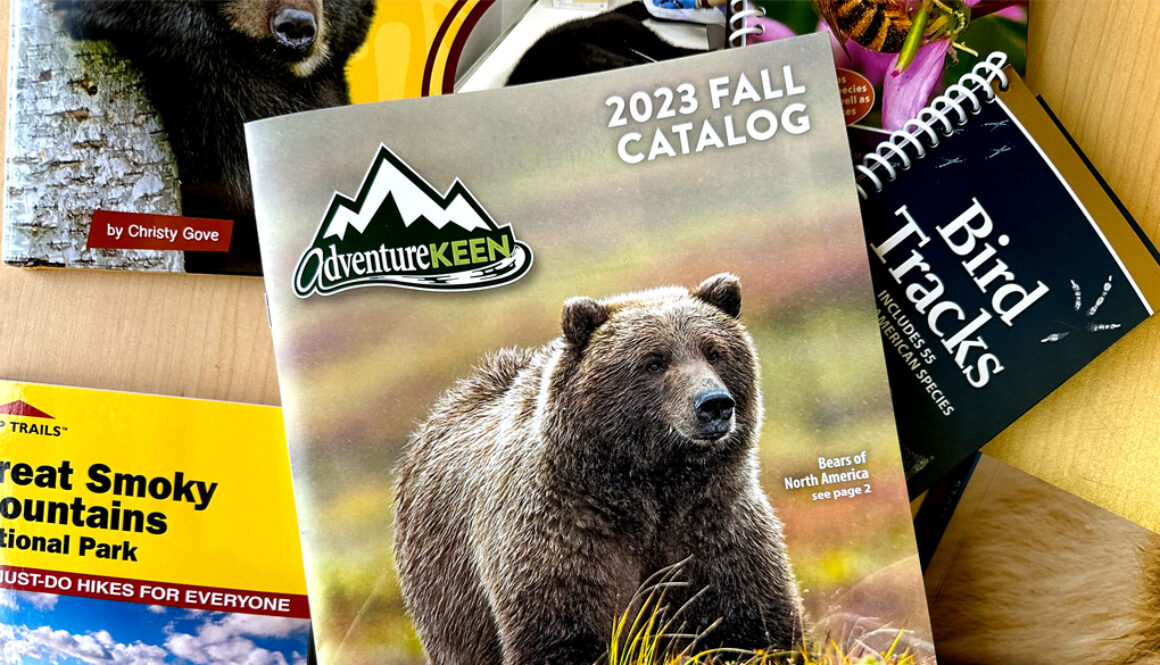
It is always an exciting time when a new catalog hits the shelves. While this isn’t a “big” annual catalog, our Fall 2023 Catalog is jammed with new and exciting titles. The diversity of topics, cover designs, subjects, and categories is widespread.
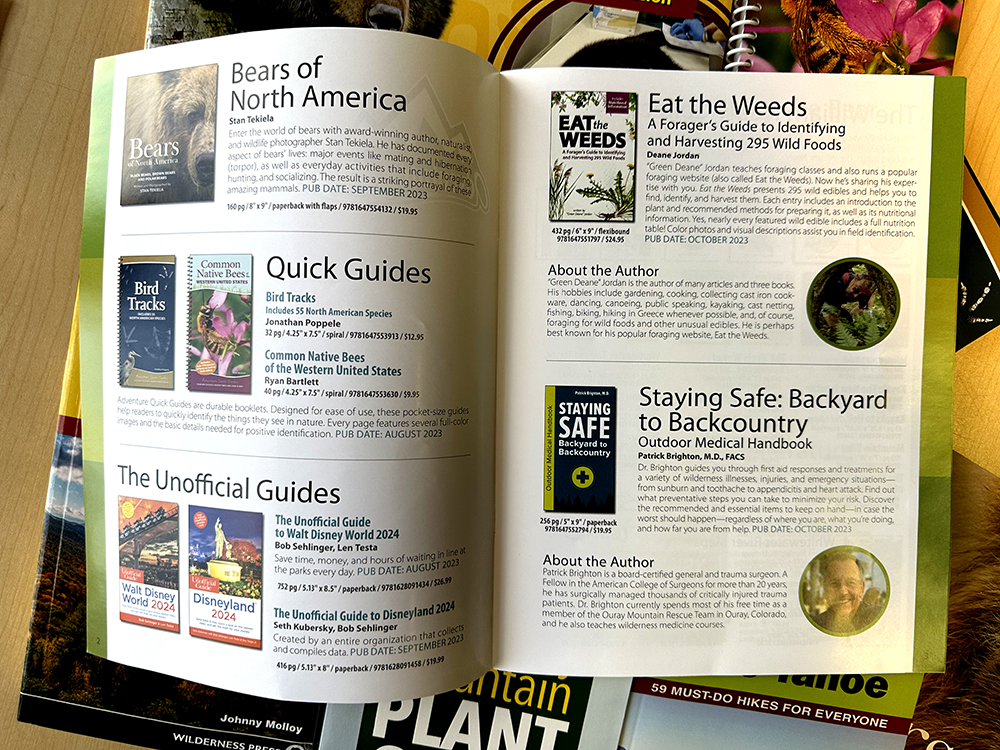
The Fall 2023 Catalog’s cover image is taken from a new book by award-winning nature photographer and author Stan Tekiela. Bears of North America presents a striking portrayal of these incredible animals through every stage of their lives.
We also have a new authoritative book called The Rocky Mountain Plant Guide, which organizes 700 wildflowers, shrubs, and trees in a color-coded system with Quick ID tips to help every hiker and naturalist in the Rocky Mountain region.
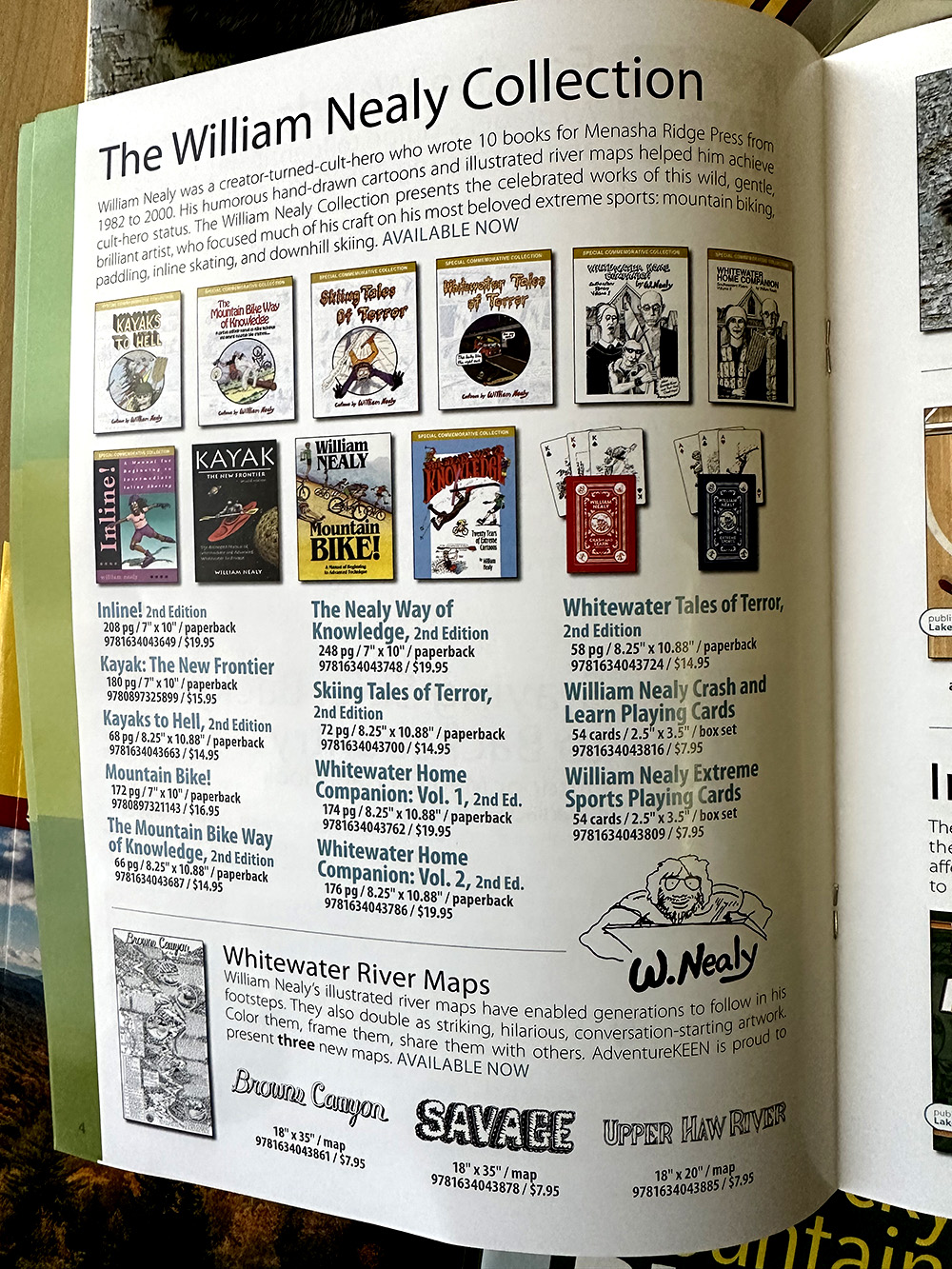
We can only mention some of the great new books in the Fall 2023 Catalog, but we want to highlight The William Nealy Collection! Page four of the catalog presents the wackiest and most fun guidebooks you can buy. Award-winning artist William Nealy created all these books and maps during the 1980s and 1990s. We have brought back many of his out-of-print books, re-printed some poster maps once lost to time, and even created a new line of playing cards, all celebrating the great outdoors and Nealy’s one-of-a-kind artwork. Be sure to check it out!
AdventureKEEN was a fortunate beneficiary of Scott McGrew’s creativity, design sensibility, loyalty, sense of humor, and friendship for nearly two decades, and we were devastated by his unexpected passing in late April after a short illness. He was 48.
As a staff cartographer and graphic designer, Scott created some truly amazing sketches, art, cover designs, and maps. He was able to simplify complex technical workflows to improve our printed books. Many AdventureKEEN authors were lucky to work with him to create some of the best guidebook maps in print today. Over the years, a lot of the company’s book covers benefited from his detailed eye for imagery and typography.
Scott was loved by his family, his friends, and everyone he worked with here. His jokes, smile, and camaraderie are greatly missed.
With incredible sadness, we share the loss of our dear friend and respected colleague Ritchey Halphen. Ritchey passed away unexpectedly on April 14th. Ritchey was a cherished friend to many, a loving partner to Tom, and what one production artist accurately described as “nothing less than an editor’s editor, the crème de la crème.”
A talented editor and project manager, Ritchey helped shape the direction of many books at Menasha Ridge Press and AdventureKEEN during his 18 years at the company. Notably, Ritchey was longtime co-author and editor of AdventureKEEN’s The Unofficial Guide to Disney Cruise Line, which is published annually. His incredible attention to detail benefited many of the complex and fact-rich titles published by the company. Ritchey loved dogs and was committed to helping animals in need.
Ritchey was integral to any project he worked on, offering so much time to polish a manuscript to perfection—something that his authors and co-workers greatly appreciated.
We already miss his insights, wit, and conversation so much.
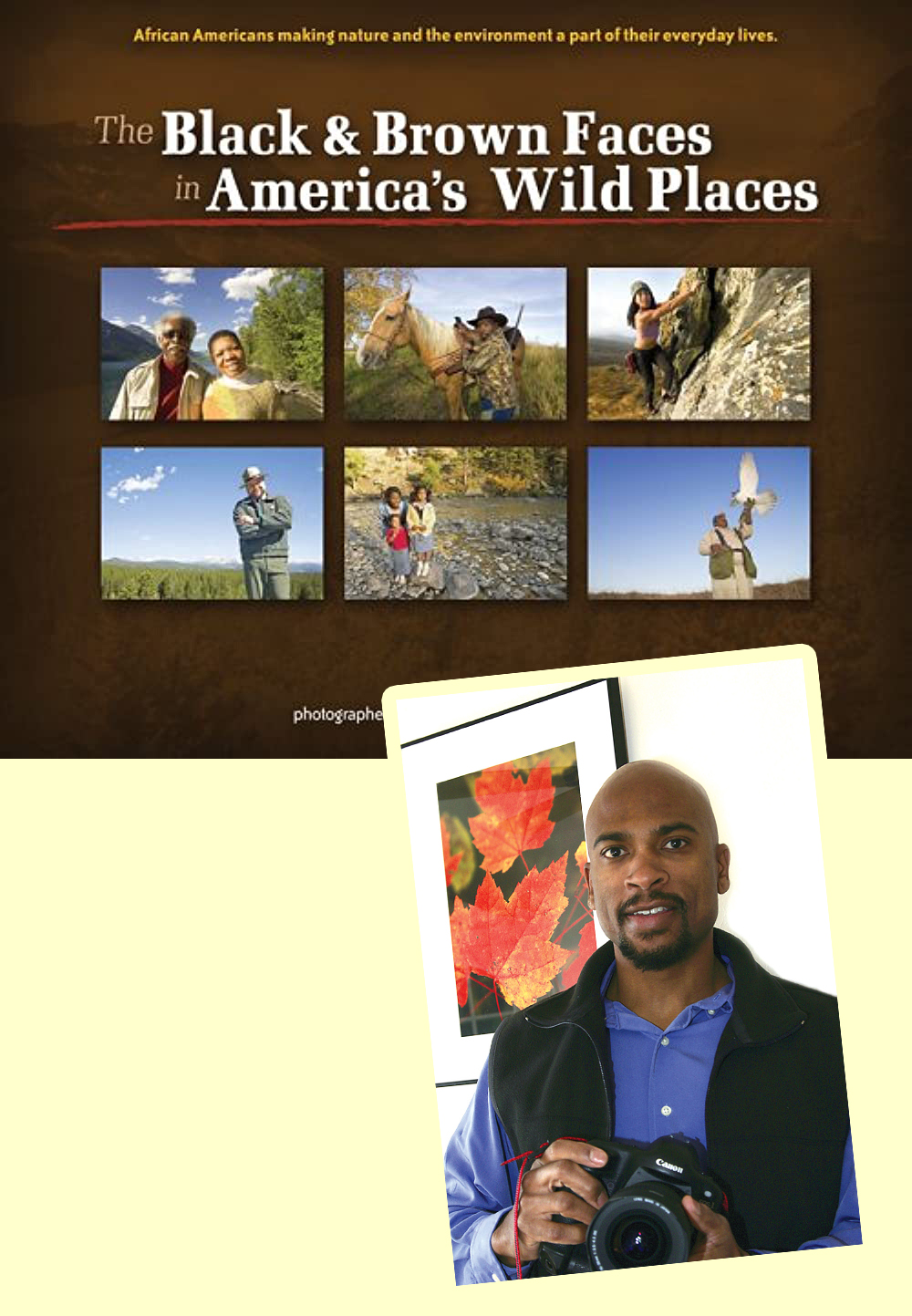
In 2006 Dudley Edmundson conducted a series of interviews with African American outdoors-people that culminated in the book Black & Brown Faces in America’s Wild Places.
A lot has changed, in the world, and around the United States, in the 17 years since Black & Brown Faces in America’s Wild Places was first published. Yet, when reading through the interviews, it is easy to see the common themes and energy that link all of their experiences with the growing outdoor community who LOOK like them and share their passion for nature and the outdoors.
Over the coming months we will be sharing the interviews from Black & Brown Faces in America’s Wild Places here on our blog, and we hope you can find your voice to add to those celebrating their passion for the outdoors.
Cheryl Armstrong, President and CEO, James P. Beckwourth Mountain Club Denver, Colorado
Heroes and Mentors
The most important mentor in my life was my father. I guess you could describe him as a black Ernest Hemingway. He was a big game hunter and trophy fisherman; he was way ahead of his time. We traveled all around the world during my childhood and did outdoor activities as far back as I can remember.
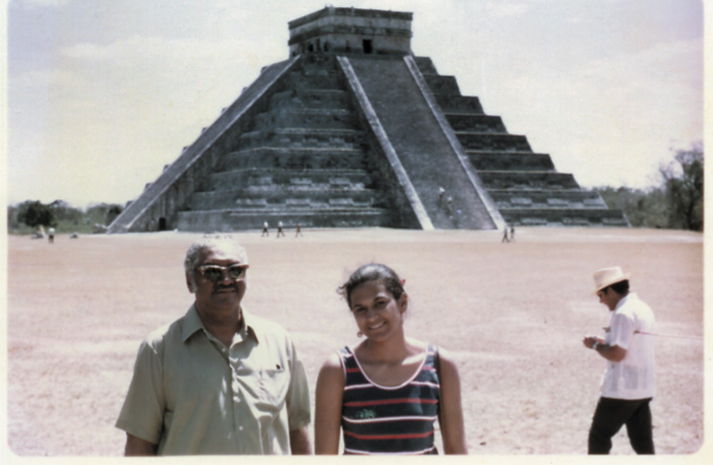
We would travel to Mexico for fishing and traveled to different countries around the world visiting historic places, climbing the pyramids in Mexico—you name it, we did it. My father traveled to Africa quite a bit in the late 1950s as a big game hunter; he would go on safari there. He also wrote and was a civil and women’s rights leader and a great speaker, too. I had a great mentor in my father.
Minorities in Our Wild Places
I don’t think that African Americans and other people of color spend enough time in the outdoors. The reason, I believe, is because they just don’t have the opportunities and access to do so. Getting into the outdoors oftentimes requires transportation and many urban residents do not have reliable transportation. Another factor is that it takes a certain amount of know-how and equipment to do these things. Many of them simply cannot afford it, nor do they have the skill sets to be able to safely do things like camp or backpack. In order to get that knowledge, they need access to a program or organization like the Beckwourth Mountain Club.
Youth and Wilderness
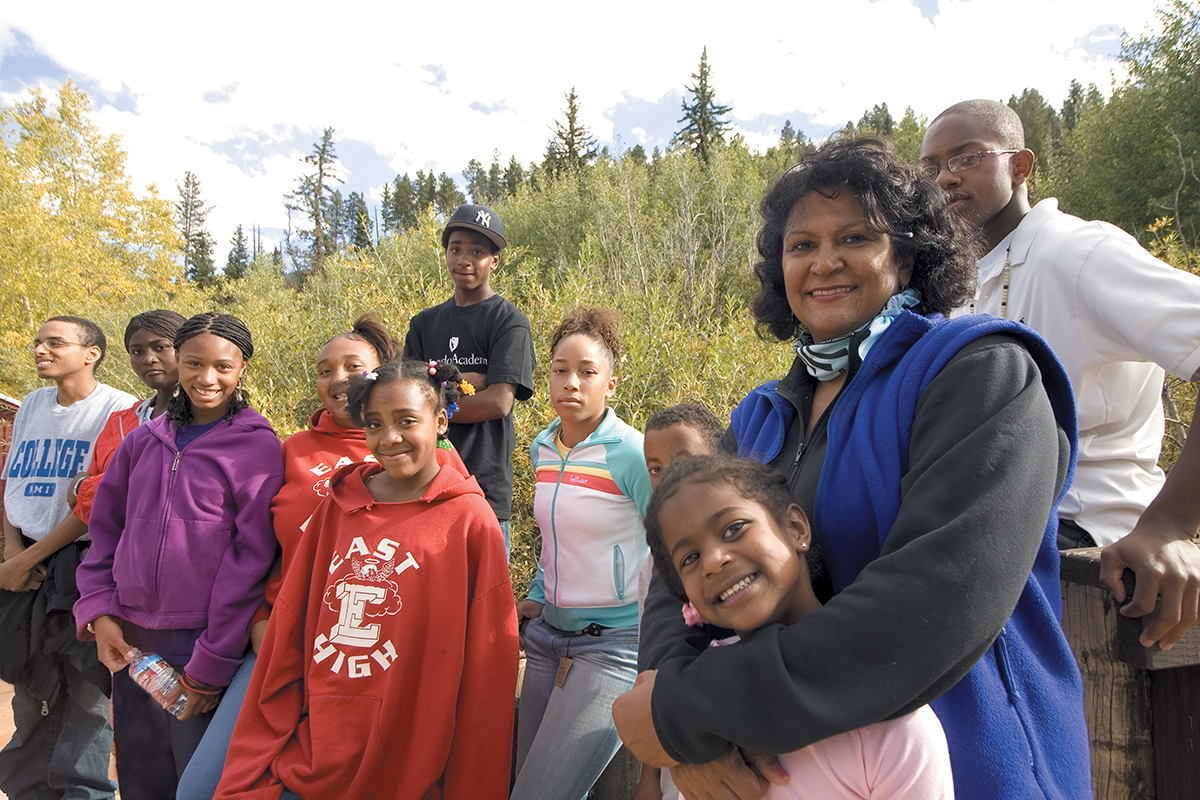
One of the rewarding parts of running the Beckwourth outdoor and youth program here is experiencing firsthand the joy and awe of children who come through our program. This is Denver and we come very close to the front range of the Rocky Mountains, with its alpine lakes and flower-filled meadows within an hour or so of the city. However, 87 percent of the children who come through our program, although born and raised in Denver, have never been to the mountains and seen this breathtaking scenery. Most of them have never experienced what it is like to climb along a mountain trail or have never been camping. Oftentimes when they first have this experience of an overnight of camping, or seeing the night sky away from the city, the looks on their faces are truly remarkable.
This is a long-term mentoring program that is not just a one-time camp-out or one-week trip; kids can sign up in our program as early as age 8 and remain in our program until they are age 18, and even after that they can come back and work as part-time program assistants and also as youth leaders. A big part of the program is to not only introduce urban youth to the outdoors, but to seek youths who really enjoy the outdoors, key in on those particular kids and encourage them to pursue careers in natural resources fields. We help young people with career prep, college scholarships, and summer internships with national partners such as the Park Service, the Environmental Protection Agency, the U.S. Forest Service, the Bureau of Land Management, and others who are interested in diversifying their workforce.
The keyword is “diversifying.” Everybody is jumping on the bandwagon because they realize that the population demographics in the country are changing, and if we don’t impress upon this younger and more diverse generation the importance of protecting our wilderness areas, then we are all going to be in trouble. It’s very important to pass on those ethics and foster stewardship with our young people. Plus it is important to show them, contrary to what most city residents think, that the outdoors and outdoor activities can be enjoyed by everyone, not just by wealthy or middle-class white people.
Best Outdoor Experiences and Favorite Places
My favorite outdoor activity is and always has been horseback riding. I have been riding since I was five years old and still love it. Being on the back of a horse on a trail, climbing up into the mountains and wilderness areas of Colorado makes me feel like I am truly at home. Camping out under the stars and seeing the beauty of the constellations with no light pollution from cities puts me in a whole other state of mind. It relaxes me and takes away all the stress that I may have had. Nothing makes me feel the same way; nothing is even comparable.
Some of my more memorable experiences in the outdoors with my father and my family include touring the ruins of the fabulous city Angkor Wat in Cambodia and climbing the pyramids in the ruins of the ancient Mayan city, Chichen Itza, on the Yucatan Peninsula in Mexico. I remember holding a huge python in Algiers, Morocco, and watching a ceremonial snake dance with live cobras. We also rode camels at sunset in the desert there; it was just beautiful. We rode elephants while in Thailand and Cambodia. My father enjoyed life and enjoyed world travel, and he has given me outdoor experiences I will never forget. I feel very fortunate.
Here in the United States, some of my more memorable experiences include seeing the Grand Canyon at sunrise. And seeing a female grizzly with her cubs and, on the same morning, a wolf pack in the Lamar Valley of Yellowstone National Park. In New Mexico I took a night hike at the cliff dwelling of Bandolier National Monument. We saw thousands and thousands of bats emerging from their caves at dusk.
But my favorite place to spend time outdoors is in Colorado’s Rocky Mountain National Park. I say that even though I have traveled all over the world and seen some pretty incredible places. I have been in just about every state in this country, which includes visits to several national parks and state parks, but for me nothing can compare with the beauty of Rocky Mountain National Park.
Being a Face of Color in Remote Places
On field trips with youth groups here in Colorado, the children always notice that whenever we go somewhere hiking or camping, people stare at us. White people stare at our groups of African American or Latino youth or adults—it happens with our group every time we go on a field trip, simply because they are not accustomed to seeing people of color in the outdoors. There is also a certain amount of prejudice in some of the rural areas that we go to, which includes unfriendly and rude staring that is probably meant to intimidate us. The kids always ask why people are staring at them, and we tell them it is because they are special. Our program is very disciplined and structured, and we teach the children to conduct themselves in a very respectable manner so their behavior does not warrant the attention they get.
Environmental Advocacy and the Future
Stewardship might be the most important part of our program here in the Beckwourth Mountain Club. I am very proud of the fact that we not only teach our young people about the environment, but we also teach them the importance of protecting, preserving and managing this country’s natural resources. We do that by partnering with national organizations like the National Park Service, the U.S. Forest Service, Colorado State Parks and other organizations. Every long trip we do with the youth program also incorporates work projects. The kids not only learn that it is fun being in the outdoors, but they also have to learn how to protect the environment—how to restore trails, how to restore and protect natural habitats—and they learn about different ecosystems and how they function.
I do many presentations about the Beckwourth Mountain Club and its efforts to increase diversity in the outdoors. I have traveled to national conferences around the country as a guest speaker for seminars, panels and workshops. One comment I frequently hear from non-people-of-color never ceases to amuse me—“I didn’t know groups like yours existed!” People of color, whether they are Black, Latino or American Indian, have always had a deep connection to the land. It is part of their culture. They lived on the land, and they survived by living off of the land. It has only been in the last 100 years or so that people of color have become urbanized.
Another frequent comment I hear comes from environmental groups. They are surprised about the results of recent surveys. The surveys showed that people of color who reside in urban areas: (1) want their children to be exposed to the outdoors; (2) are very supportive of protecting the environment; and (3) look forward to opportunities to get into the outdoors. Why should this be surprising? Why would urban residents and people of color not want these opportunities for themselves and their children?
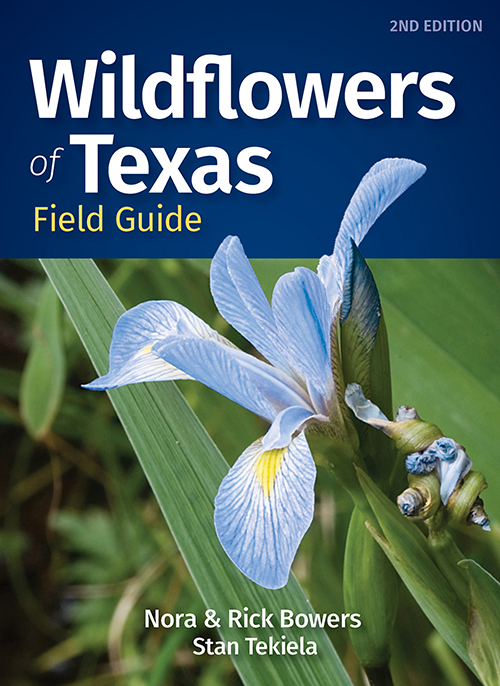
Releasing today, just in time for the upcoming spring season, is the new edition to the Adventure Publication’s popular flower identification guide – Wildflowers of Texas, 2nd edition.
This field guide is organized by color and size, dramatically speeding up your ability to identify every Texas flower you come across. To help make identification even quicker, the 200 most common wildflowers in Texas – and only Texas – are collected, so you don’t have to waste time sifting through flowers from other parts of the country.
ISBN 9781647553821
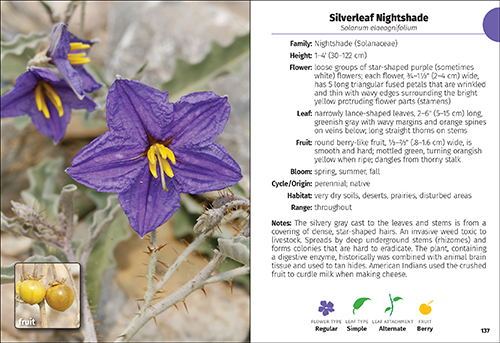
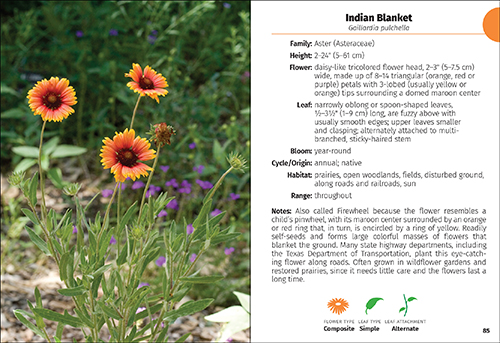
This 432-page book by Nora Bowers, Rick Bowers, and Stan Tekiela features beautiful, full-color, full-page photos. Every entry also includes fact-filled information lists highlighting particular flower features to aid you in identifying flowers. Each flower entry also has icons pointing out specific identification points to help speed up your ability to identify Texas flowers. The book’s design uses a color-based chapter organization that set this field guide apart from the competition. Inside you’ll see the book organized by the colors: Blue, Brown, Green, Orange, Pink, Purple, Red, White, and Yellow. The book also includes a super handy Checklist, Index, and Glossary.
This new edition includes updated photographs, expanded information, naturalist notes, and even more of the authors’ expert insights. Perfectly sized for the pocket or bag, this trim volume is an excellent companion on the trail, picnic, or chair side table.
Nora Bowers is a writer and photographer. A member of the North American Nature Photography Association, Nora’s credits include Birder’s World Magazine and many books and calendars. She is the co-author of field guides for several states.
Rick Bowers is a photographer, naturalist, and writer. He has been photographing nature for more than 35 years. Rick’s photo credits span the gamut, from National Geographic to local publications. He is the co-author of field guides for several states.
Naturalist, wildlife photographer, and writer Stan Tekiela is the author of more than 190 field guides, nature books, children’s books, and playing cards, presenting many species of birds, mammals, reptiles, amphibians, trees, wildflowers and cacti in the United States. With a Bachelor of Science degree in Natural History from the University of Minnesota and as an active professional naturalist for more than 30 years, Stan studies and photographs wildlife throughout the United States and Canada. He has received various national and regional awards for his books and photographs. Also a well-known columnist and radio personality, his syndicated column appears in over 25 newspapers, and his wildlife programs are broadcast on several Midwest radio stations.
In 2006 Dudley Edmundson conducted a series of interviews with African American outdoors-people that culminated in the book Black & Brown Faces in America’s Wild Places.
A lot has changed, in the world, and around the United States, in the 17 years since Black & Brown Faces in America’s Wild Places was first published. Yet, when reading through the interviews, it is easy to see the common themes and energy that link all of their experiences with the growing outdoor community who LOOK like them and share their passion for nature and the outdoors.
Over the coming months we will be sharing the interviews from Black & Brown Faces in America’s Wild Places here on our blog, and we hope you can find your voice to add to those celebrating their passion for the outdoors.
Cheryl Armstrong, President and CEO, James P. Beckwourth Mountain Club Denver, Colorado
The James P. Beckwourth Mountain Club was named after a famous biracial African American, James Pierson Beckwourth. He was a true legend of the West.
He was born in 1798 in Fredericksburg County, Virginia, to a white plantation owner and one of his African American female slaves. They moved to Missouri when Jim was about six years old, because they wanted to stay together, and it was easier at that time to do that there than it was in Virginia. Beckwourth was raised in Missouri. He was taught to read, as were all of his siblings. He was apprenticed to a blacksmith so he would have a trade. Around 23 years of age he was fortunate enough to meet General William Ashley, who founded the Rocky Mountain Fur Trading Company. Beckwourth joined the company as a hunter, and over his long fascinating life he was, among other things, a frontiersman and an exceptional explorer. In 1850 he discovered a pass over the Sierra Nevada Mountains that would lead pioneers into the Sacramento Valley of California.
He also saved the life of General Zachary Taylor, who later became President of the United States. Beckwourth was also war chief of the Crow Indian nation. He was adopted into the tribe and he pretty much lived with the Crow for many years. He spoke a multitude of Native American dialects as well as being fluent in English, Spanish and French. He was also one of the co-founders of the city of Pueblo, Colorado.
Our organization named itself in honor of Jim Beckwourth because of his contributions to the West and also because he was a real trailblazer and adventurous guy. We like to think that we honor some of that spirit of adventure and his legacy in our organization.
Childhood Experiences and Turning Points in Nature
I was born in Detroit, Michigan. My father’s side of the family was one of the original black families in Michigan. They founded the first Episcopal churches. My childhood was pretty unusual for African Americans at the time. My father was a doctor, and his father was a doctor and medical school professor, and education had gone on and been a tradition in my family for generations and generations. I guess you could say I had a very affluent childhood.
We had a house in Detroit where my father practiced medicine and proudly served inner city residents. He also had a home in Canada, across the river right on Lake Saint Clair. So I grew up canoeing, swimming and hunting in the summer. I fished and explored the woods around our home in Canada. My father had a boat and we got to water ski and do all of the traditional water sports. We would ice skate on the lake in the winter.
I grew up being a very athletic girl. I loved sports and the outdoors and being in the woods, immersed in nature. I loved being under the open night sky more than anything—it was good for the soul then, and it is good for the soul now.
What I Do in the Outdoors
I have been involved with the Beckwourth Club since I moved to Denver in 1995. In 1998 we started a formal program called the Beckwourth Outdoor Education Center, specifically to take urban youth into the outdoors for hiking, fishing, camping, backpacking, snowshoeing, whitewater rafting, canoeing and kayaking. We teach them mapping and compass skills as well as self-arrest training and leadership skills.
The reason we started the Beckwourth Mountain Club (it was formed in 1993) was because of our passion to bring the outdoors to inner city youth and residents. The organization is run by a terrific group of almost 60 volunteers, predominantly by people of color. They act as mentors, chaperones, hike leaders, instructors and historical reenactors. They mentor not only the young kids in the organization, but also the adults that come to our center that are new to the outdoors.
The membership is open to everyone and is about 65 percent African American, 25 percent Latino, and the remaining is mixed race, multi-race, Asian, Anglo and all combinations thereof. Membership is for families, singles and seniors. We do outdoor activities every single weekend, from easy day hikes, to climbs of Colorado’s peaks. We also do upscale trips such as orca watching on the San Juan Islands off the coast of Washington state, and trips to national parks such as Acadia in Maine and Yellowstone in Wyoming. The idea is to make these national parks and wilderness areas available to a broader population.
I also do a great deal of fundraising. That’s my job—I am the money beggar! I am the grant writer and public relations person. I travel around the country heading up panel discussions and workshops, doing presentations on our program. I guess you could say I wear about 15 different hats around here.
I spent many years in the legal profession, but eight years ago I was able to break away and do what I truly love and have a passion for. There is no comparison salary-wise between working for a nonprofit organization and being in the legal profession, but I would not do anything else even if you gave me a million dollars. I enjoy running this organization and doing what we do for the community.